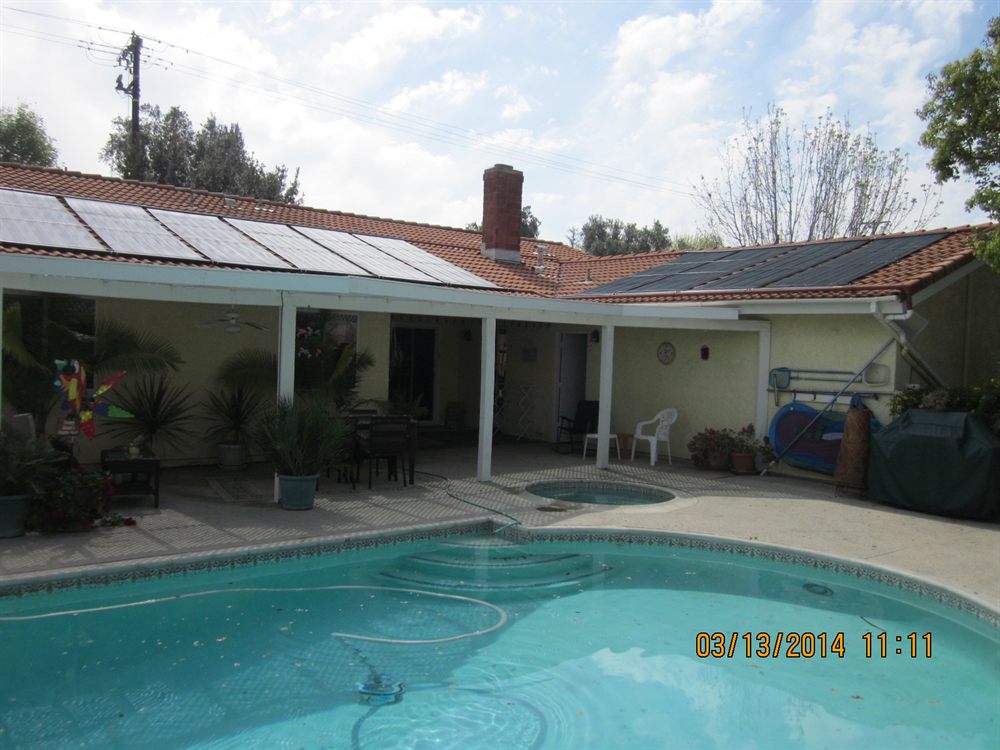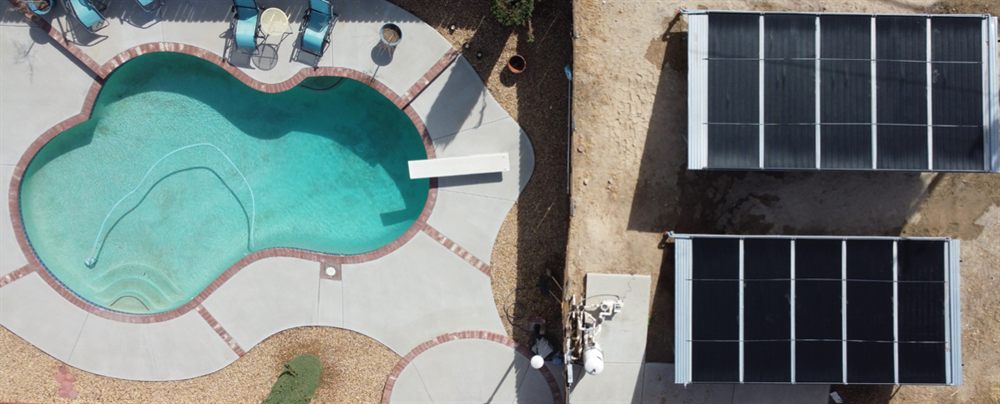
It depends on the system. Some solar pool heaters drain themselves and never need winterizing. Others don't drain on their own, and those need to be turned off and drained before winter.
A system that drains itself
It doesn't need winterizing. Its panels only hold water while the system is running, and it only runs when it's warm enough to heat. When the pump stops, a vacuum relief valve at the top of the array lets air in, and the water runs back down to the pool. Nothing is left in the panels on a freezing night.
A system that doesn't drain on its own
It needs winterizing. Before the first freeze, we turn it off and drain all the water out, so nothing is left in the panels to freeze. In spring, we start it back up, ready for swim season.
Some owners do it themselves. The usual steps are below, and if you'd like, call and we'll talk you through it.
How to tell which one you have
Look for drain valves. A drain valve is a small faucet with a hose thread, often called a hose bib. You'll find them on the ends of the panels up on the roof, or at the end of a drain line that runs down the side of the house. If your solar has one, it most likely needs draining by hand. Some systems have several, and every one needs opening.
Panels that sit lower than the pool's water level can't drain back to the pool either, so they need winterizing too.
When to winterize
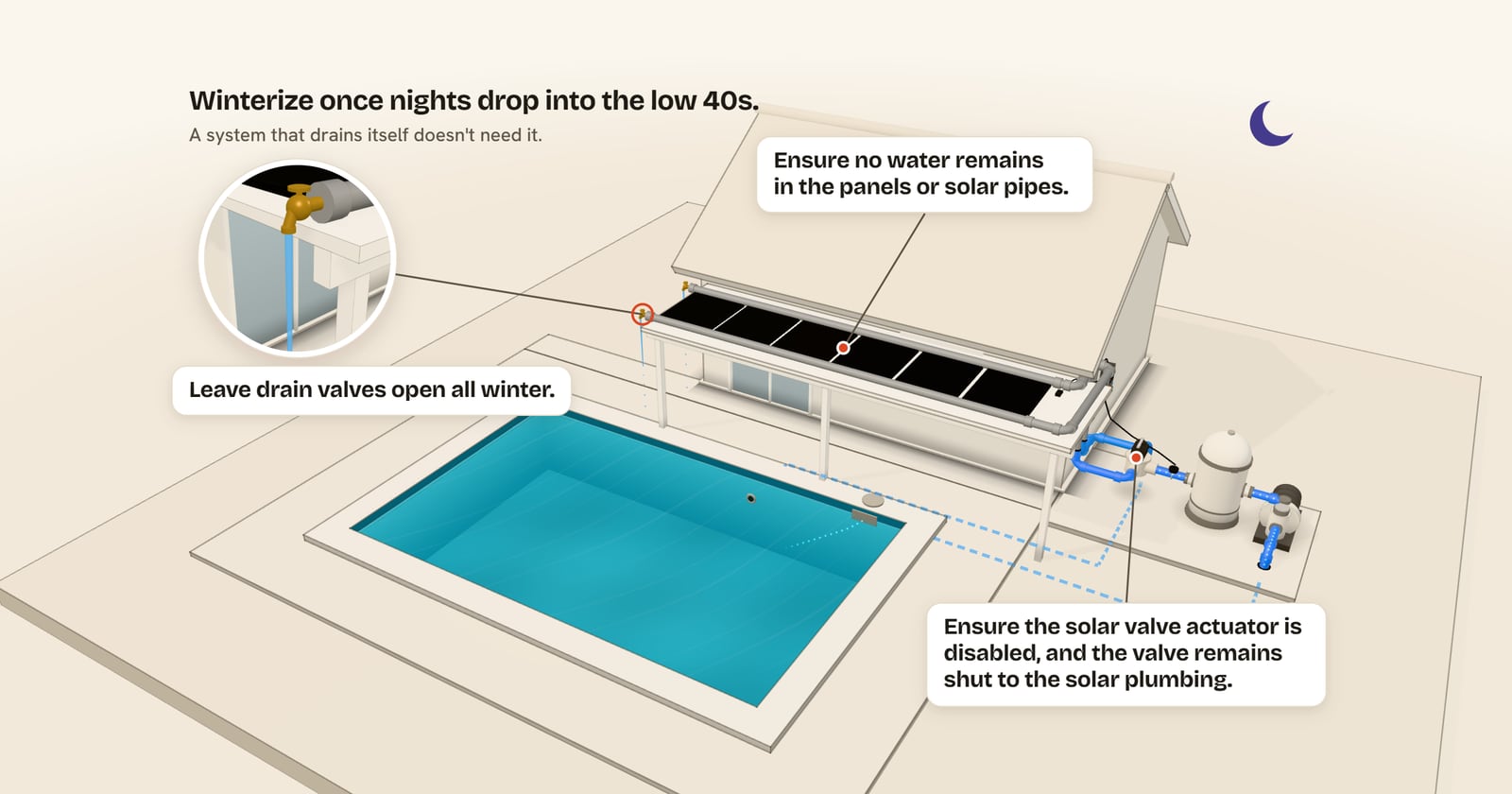
It varies by panel maker, but the rule of thumb is to winterize once nights start dropping into the low 40s. On a clear night, panels on a roof can get colder than the air around them, so they can freeze before a thermometer reads 32. Better safe than sorry: freeze damage can ruin panels, and it isn't covered under warranty.
How to winterize a system that doesn't drain itself
Every system is a little different, but the usual shutdown goes like this:
- Turn off the pump.
- Set the solar valves so the panels can drain. Set them to let as much water as possible run back out of the panels to the pool. If your panels sit lower than the pool's water level, they can't drain back, and pool water can run up into them, so close the isolation valves (the shut-off valves on the pipes to and from the panels) to cut them off from the pool, and drain them through their drain valves in step 5.
- Let them drain. Give the water time to run back out of the panels. Depending on the system, that should take several minutes. If it's taking longer than it should, make sure the vacuum relief valve at the top of the array is working properly.
- Check that the pump is still off, and that the actuator (the motor on top of the solar valve) is set so no more water goes to the panels.
- Open every drain valve. Find the parts of the panels and solar pipes that can't drain on their own, and open the drain valves there. On some systems you can run a hose from a drain valve back into the pool. Let all the water out, then leave the drain valves open all winter, so any water that does get in can't sit in the panels.
- Close off the solar side. Make sure the valves are set so no water can reach the panels, and switch the actuator off. If a solar controller or pool automation runs your solar, set solar to off there too, so it can't send water back up on a sunny day or with a freeze-protection setting. To be extra safe, you can take the actuator off the valve, so the solar valve can't be turned by accident.
- Turn the pump back on for the pool's normal filtering, and check that no water goes up to the panels. Nothing should come out of the open drain valves.
In short: no water left in the pipes or panels, and every valve set so no more water can reach them until spring.
Be careful
Getting it wrong can cost you the panels or the pump. Water left in the panels can freeze and split them. And if the solar valve sends water toward panels whose valves are closed, the pump pushes against a dead end ("dead-heading"), which can overheat it and ruin it.
Only winterize the system yourself if you know what every valve on it does. Even if you're confident, have us do one winterizing and one spring start-up on your system first, so anything particular to your setup is found and you know what to watch for. Some drain valves are up on the roof, too. If you're not comfortable up there, that's a good reason to call us.
Starting it back up in spring
Do it in reverse, with the pump off: close the drain valves, open the isolation valves, put the actuator back and set it, and any controller, back to automatic. Then turn the pump on and watch for leaks the first time water goes up. A panel that froze over winter usually shows up as a leak at start-up, and we fix those.
Not sure which kind you have?
Call us at (951) 276-8286 and we'll check, and take care of it if it needs it. We work on any brand of solar pool heater, whoever installed it.